Global
by Gaia Gurrieri, from Brussels
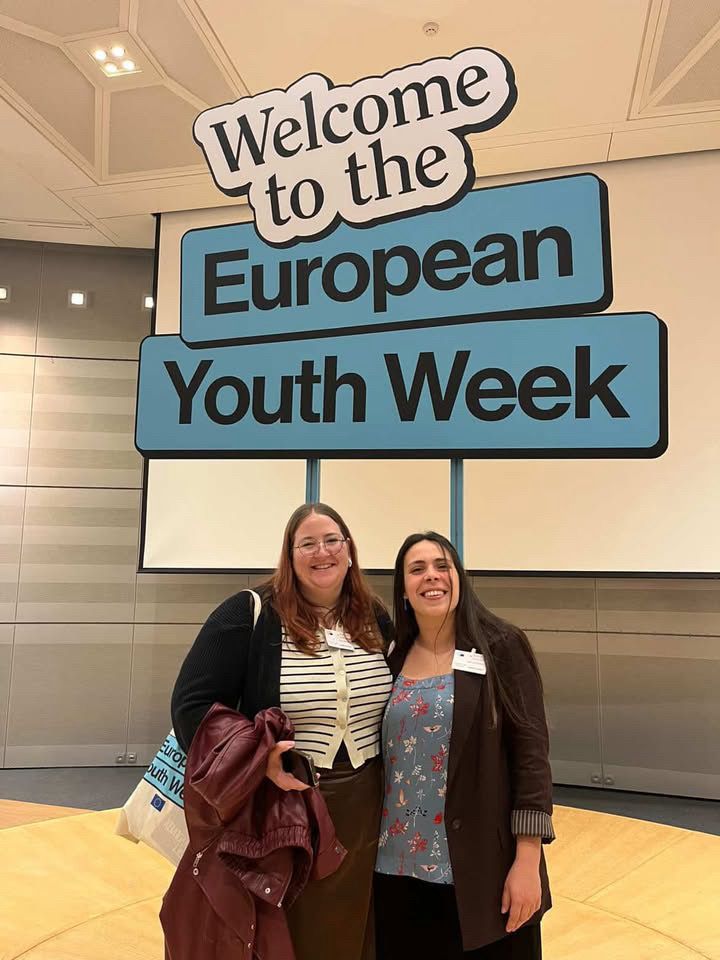
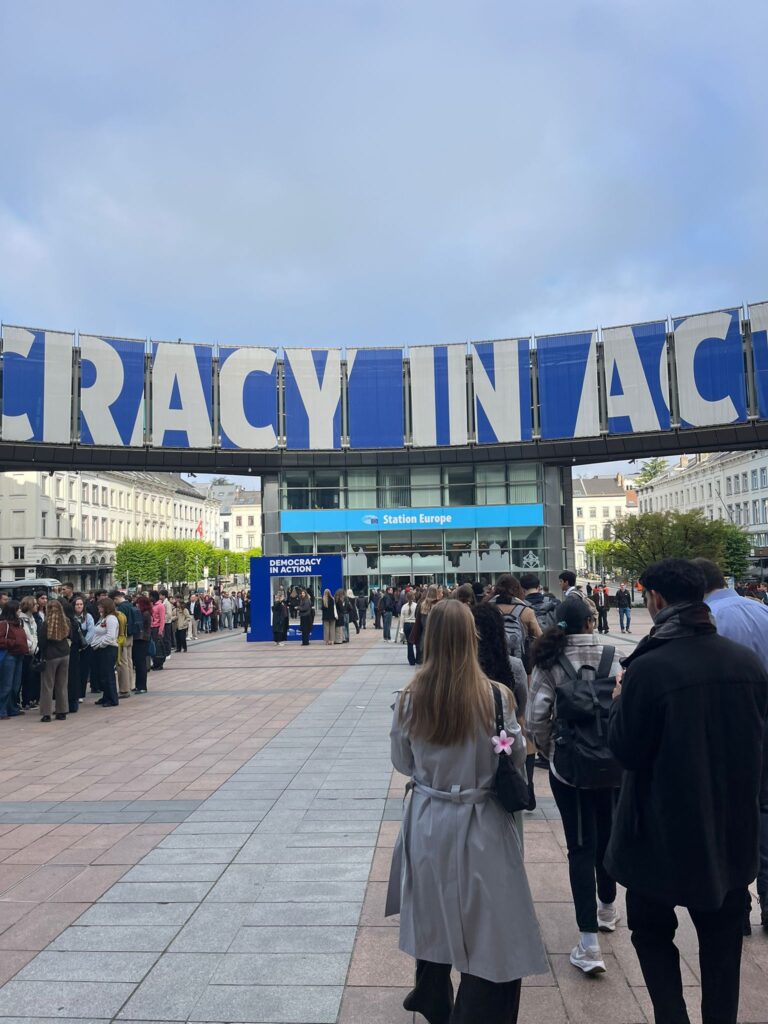
Walking through the streets of Brussels, heading to the Parliament for the European Youth Week 2026, I found myself surrounded by a line of over a thousand young people. Activists, trainees, youth delegates, each carrying a different urgency and story. On each face, a different emotion, excitement, curiosity, maybe even a bit of intimidation, but overall, there is a shared energy, the kind you feel when so many people come together inside institutions filled with history.
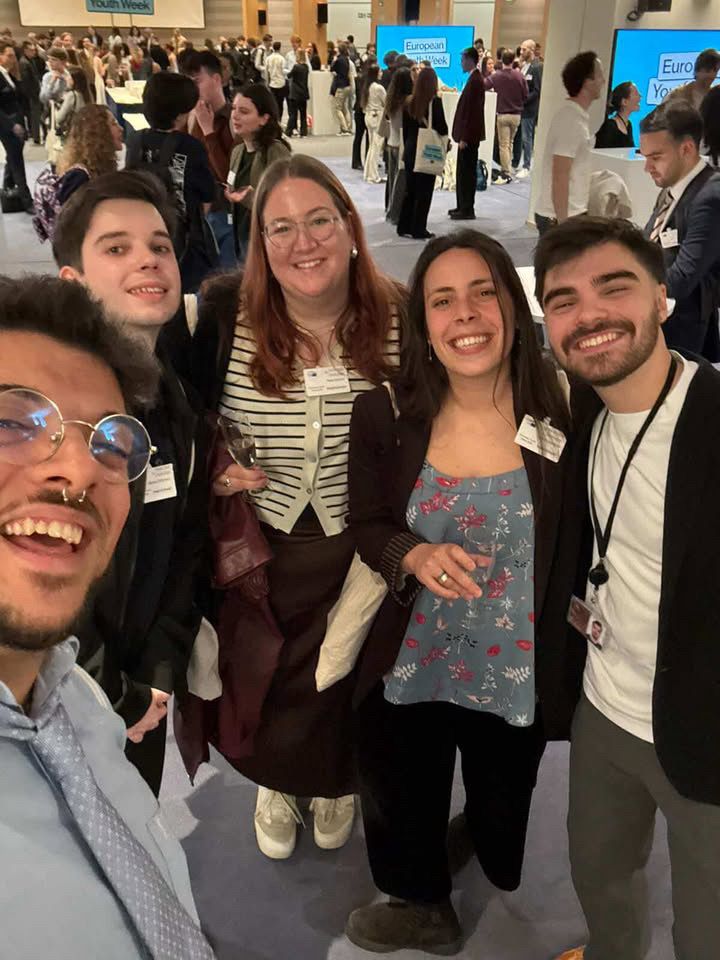
While waiting in line, I ran into familiar faces. Niki, with whom I had shared an experience in Lampedusa during a youth-led climate action training with Sublime. Sophie, my colleague from the Erasmus Mundus Global Studies in Wrocław. In that moment, the scale of the event became more personal, less about institutions, more about connections.
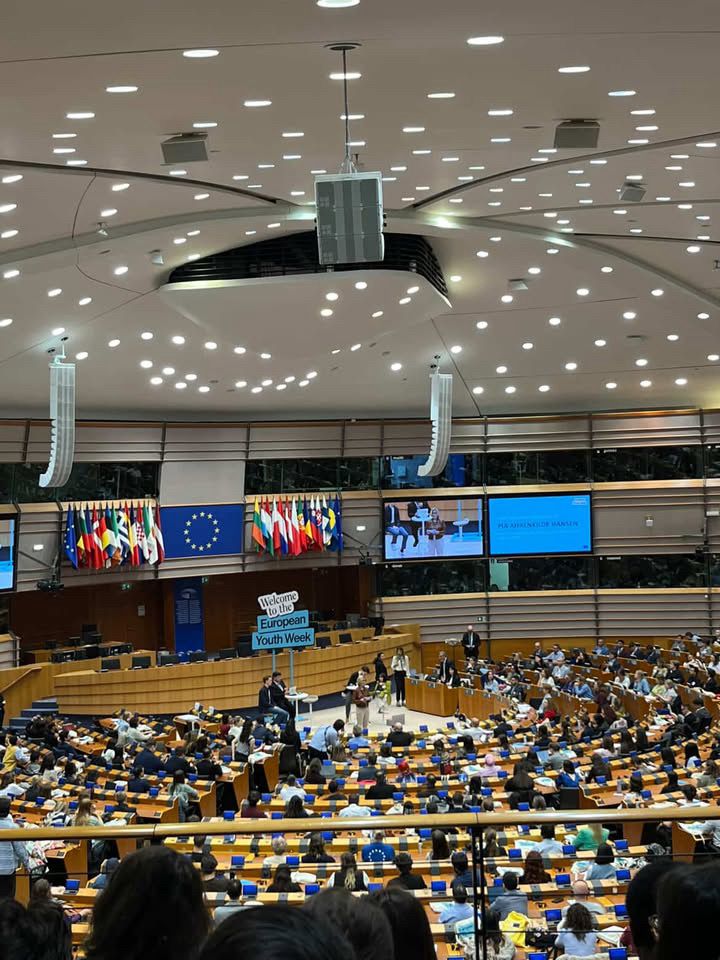
After the queue, we enter the Hemicycle, the debating chamber where plenary sessions are held, the heart of European debate. Sitting there, where decisions shaping millions of lives are discussed, the question that opened the first panel felt both simple and loaded: how can young people meaningfully shape decision-making processes in the EU and beyond?
It is a question that stayed with me throughout the entire day. Part of me understood the urgency behind it. But another part kept wondering: why is the responsibility so often placed on those trying to enter, rather than on those already inside? If access remains limited, shouldn’t institutions also question how they create space, not just how young people claim it?
Those who are excluded are asked to push harder, to speak louder, to find their way in. But what about those in positions of power? Shouldn’t they also question how they create access, how they open spaces, how they make participation not the exception, but the standard?
During the discussion, EU Youth Delegate to the United Nations, Lars Westra, offered a perspective that stayed with me throughout the day: influencing EU policy should not be the goal, but a means. The real question is not how to sit at the table, but why we want to be there in the first place. What is it that we want to change? What is it that we care about deeply enough to act on?
He invites us to think about what we actually want to change, what moves us, what we care about, what we want to see differently in society. To find our place and our space to create change.
This idea echoed in the following sessions. Yulia Ralko, a Belarusian youth advocacy expert and journalist, shifted the focus from participation to access. “The problem is not youth participation,” she said, “but youth access and inclusion in decision-making processes as a standard.” Her words reframed the narrative: the issue is not whether young people are willing to engage, but whether systems are designed to include them.
When asked about climate anxiety, something that we all feel more and more, her answer is direct: “Your action does not require permission. Create your own space. Show up.”
This becomes a kind of underlying voice throughout the day, a reminder that while access matters, agency also exists. That it is not only about having a seat at the table, but about being in the condition to speak, to be heard and to create change.
As someone in the room said, “the distance between us and institutions is not so far away.” And yet, at times, it still feels like it is.
In the second workshop with the Erasmus Student Network, we are asked to identify a key challenge faced by young people today and design a local activity to address it. Out of six groups, three focus on a similar feeling: a deep need for belonging and community.
In a room full of participants from across Europe and beyond, with different backgrounds and experiences, this shared feeling stands out. The need not only to act, but to feel part of something. To have spaces where voices are not only expressed, but received and shared.
Throughout the day, I also encountered inspiring initiatives and ideas, from projects like the School of Protest to experiences connected to the Anna Lindh Foundation, reminding me how much is already being built beyond institutional spaces, often driven by young people themselves.
At the same time, another question starts to emerge, one that connects to many of these discussions: accessibility. Access to education, to resources, to the tools needed to engage with topics like climate change and climate neutrality.
This became even more evident in discussions around climate action. In a session on Europe’s transition towards climate neutrality, one argument stood out: young people are already highly educated on climate issues, and that the real challenge is no longer awareness, but action. According to this perspective, sustainable alternatives are often simply not convenient enough, and the gap lies between knowing and doing.
And yet, I found myself questioning how universal this assumption really is. Access to education, resources, and opportunities is far from equal. In many contexts, awareness itself is still unevenly distributed. The ability to engage with climate issues, or even to imagine sustainable alternatives, depends heavily on access to education, economic stability, geography, and infrastructure. Participation is not always a matter of willingness or action, but of structural barriers that are still far from being addressed.
This makes the question of participation even more complex: who is in the room, and who is still missing?
Perhaps the challenge is not simply a lack of action, nor an excess of knowledge, but the uneven conditions that determine who can turn awareness into agency.
Across all these conversations, one thing became increasingly clear: the issues we are facing, climate change, social inequality, and exclusion, are deeply interconnected. They cannot be addressed in isolation. Talking about youth participation also means talking about access to education, about economic conditions, about gender and racial dynamics, about who is represented and who is not.
In this sense, participation and action are not just a question of presence, but of structure.
As Marina El Khawand highlighted in one of the discussions, trust and unity have been weakened. The European Union carries a responsibility in rebuilding that trust, by listening to voices from the ground, by understanding real needs, and by creating space for those often unheard. “Be bold, be honest,” she says. “You’re influencing. We are influencing.”
By the end of the day, what remains is not a single conclusion, but a layered feeling. The energy of being surrounded by people who care and being part of something collective. The inspiration of shared ideas. But also, the awareness of existing gaps, between access and inclusion, between knowledge and action, between being invited and truly being heard.
But above all, a quiet insistence kept resurfacing: do not wait to be invited.
Maybe this experience is not only about entering institutions, but about rethinking how we relate to them. Not about being given a voice, but recognising that we already have one, and choosing how to use it in our communities, universities, and everyday lives.
What stayed with me most is the realization that change begins before and beyond institutions, in the environments we create ourselves. Where ideas circulate, where people feel they belong, and where action becomes collective, where struggles are not treated as separate, but recognised as deeply interconnected across borders and systems of inequality.